Archives
- 2026-08
- 2026-07
- 2026-06
- 2026-05
- 2026-04
- 2026-03
- 2026-02
- 2026-01
- 2025-12
- 2025-11
- 2025-10
- 2025-09
- 2025-03
- 2025-02
- 2025-01
- 2024-12
- 2024-11
- 2024-10
- 2024-09
- 2024-08
- 2024-07
- 2024-06
- 2024-05
- 2024-04
- 2024-03
- 2024-02
- 2024-01
- 2023-12
- 2023-11
- 2023-10
- 2023-09
- 2023-08
- 2023-07
- 2023-06
- 2023-05
- 2023-04
- 2023-03
- 2023-02
- 2023-01
- 2022-12
- 2022-11
- 2022-10
- 2022-09
- 2022-08
- 2022-07
- 2022-06
- 2022-05
- 2022-04
- 2022-03
- 2022-02
- 2022-01
- 2021-12
- 2021-11
- 2021-10
- 2021-09
- 2021-08
- 2021-07
- 2021-06
- 2021-05
- 2021-04
- 2021-03
- 2021-02
- 2021-01
- 2020-12
- 2020-11
- 2020-10
- 2020-09
- 2020-08
- 2020-07
- 2020-06
- 2020-05
- 2020-04
- 2020-03
- 2020-02
- 2020-01
- 2019-12
- 2019-11
- 2019-10
- 2019-09
- 2019-08
- 2019-07
- 2019-06
- 2019-05
- 2019-04
- 2018-11
- 2018-10
- 2018-07
-
Encouraged by the observation obtained from region A
2022-03-12
Encouraged by the observation obtained from region A, we selected the structure of 1 as the next template to successively pursue the SAR on regions B-D of 1 (lower side of Fig. 2). Next, we turned attention to the external aromatic ring of 1 to verify the impact on the antagonistic activity and prep
-
The structural similarity software vROCS
2022-03-12
The structural similarity software vROCS (OpenEye) [45] has been utilized by Musumeci et al. [46] to screen the Maybridge [47] HitFinder database (∼14,400 compounds) using Distamycin A (Fig. 3B) as a query. Using the Tanimoto coefficient (Section 6.4) and vROCS's colour scoring (atom/feature similar
-
In addition we assessed the viability of
2022-03-12
In addition, we assessed the viability of 1,2,3,4-tetrahydroquinoline (13t) and 1,2,3,4-tetrahydroisoquinoline (13u) as the tail on account of our previous SAR results. To our delight, 13t and 13u each had comparable activity to that of 13c, with 13u being slightly more potent than 13c. Further stru
-
In the FARM motifs of GGPPSs hydrophobic
2022-03-12
In the FARM motifs of GGPPSs, hydrophobic A 205804 are replaced by aliphatic amino acids, which are more flexible residues and allow the entrance of longer substrates into the pocket (Wang and Ohnuma, 2000). It has been reported that the lepidopteran Manduca sexta CA possesses GGPP synthase (GGPPS)
-
Taken together our studies uncovered that the RP
2022-03-12
Taken together, our studies uncovered that the RP215 antibody recognize a novel CIgG molecule N-glycan modification at a non-consensus site within the CH1 domain expressed in LSCC tumors. RP215-CIgG interacts with the integrin α6β4 complex and the unique N-glycan epitope mediates the activation of d
-
In C elegans KDM A
2022-03-11
In C. elegans, KDM4A appears to be involved in H3K36me3 reduction on the X chromosome, suggesting that this protein has a relevant role in germ cell development (Figure 2A) (47). In addition, in HeLa cells, KDM4A is associated with the repression of the achaete-scute complex homologue 2 (ASCL2) gene
-
Diabetes and atherosclerosis are paralleled
2022-03-11
Diabetes and atherosclerosis are paralleled by impaired wound healing and endothelial angiogenesis in the periphery, which cause severe complications and mainly occur as a result of the elevated circulating levels of glucose and free fatty acids. Yuan et al. recently showed that palmitic MnTBAP Chlo
-
In conclusion re evaluation of HER status is necessary
2022-03-11
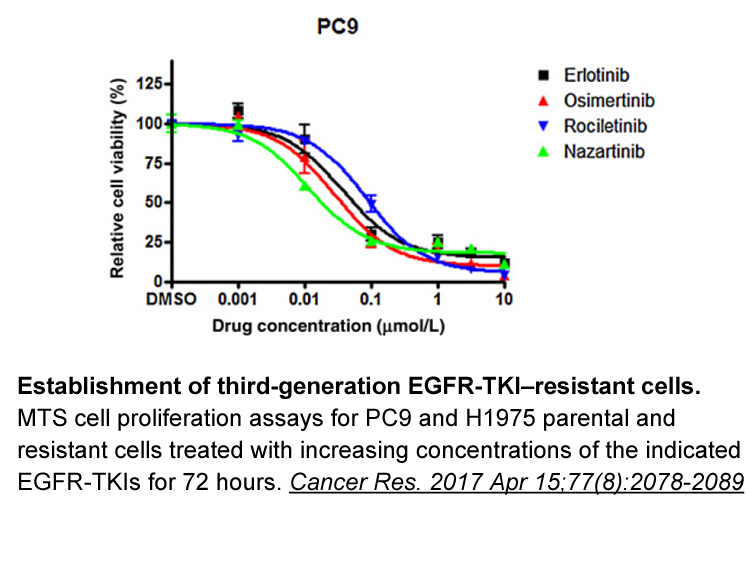
In conclusion, re-evaluation of HER2 status is necessary to determine the appropriate use of anti-HER2–targeted therapy beyond disease progression. EGFR and c-met amplification, as well as PIK3CA mutation, are rarely associated with acquired resistance. Our results highlight the importance of formal
-
br Materials and methods br Results br Discussion Dex has
2022-03-11
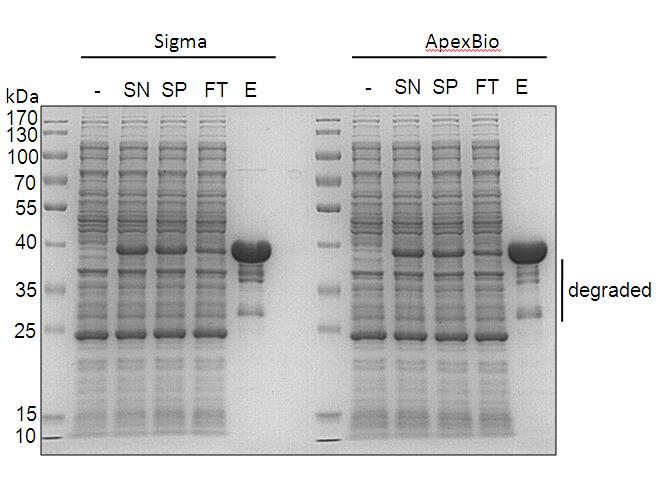
Materials and methods Results Discussion Dex has been shown to induce apoptosis in osteoblastic cell lines (MC3T3-E1, UAMS-32 cell) [24], [25]. Consistent with previous reports, we find high-dose Dex (1 or 5 μM) can induce apoptosis of MC3T3-E1 Domiphen Bromide within 24 h as evidenced by
-
The obtained sequence was deposited in GenBank under
2022-03-11
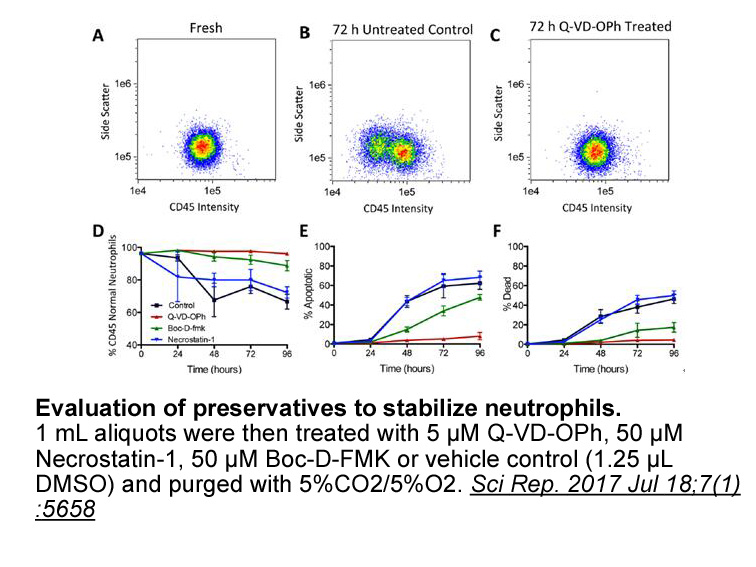
The obtained sequence was deposited in GenBank under accession number MG703576; it showed a 99% identify with sample HE817764, reported as Demodex cornei, and with JF784000, reported as D. canis. Molecular and phylogenetic analyses and the morphological characteristics helped to rule out D. cornei.
-
Renal disease is characterized by
2022-03-11
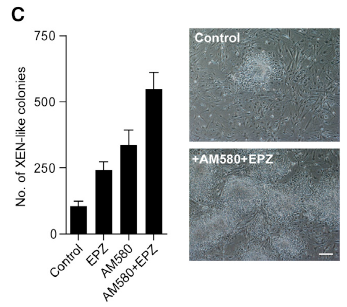
Renal disease is characterized by aberrant fibrotic remodeling of renal tissue, elevated apoptosis in kidney tissue, and eventual organ failure. In addition, patients with renal disease are more likely to suffer from systemic hypertension due to oxidative damage (reviewed in Ref. [18]). Treatment of
-
The absolute requirement for substrate prephosphorylation ra
2022-03-11
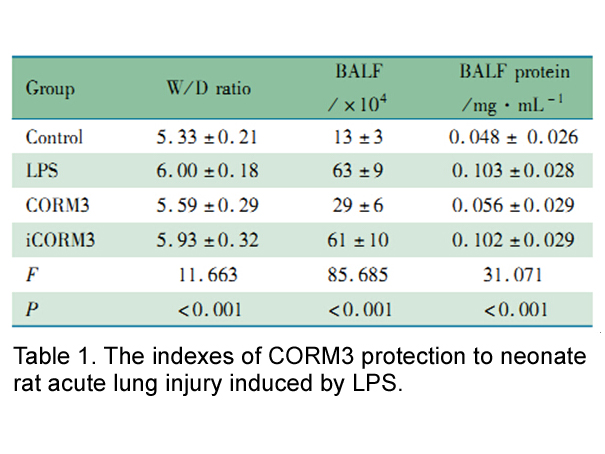
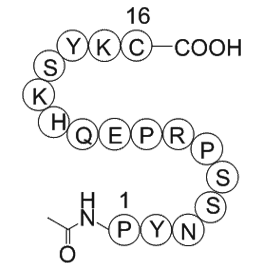
The absolute requirement for substrate prephosphorylation raised the possibility that short phosphorylated peptides might serve as selective substrate competitive inhibitors. A set of phosphorylated peptides patterned after known GSK-3 substrates was generated and shown to inhibit GSK-3 in vitro in
-
br Materials and methods br Results
2022-03-11
Materials and methods Results Our data indicated that 1,8-cineol leads to a noticeable but not significant (p = 0.07) 45% decreased phosphorylation of GSK-3α/β at Ser-9/21. Phosphorylation of GSK-3α/β at Tyr-279/216 was not affected (Fig. 1A/B). To ensure, that the decreased phosphorylation of
-
br Cholecystokinin CCK CCK is secreted by enteroendocrine
2022-03-11
Cholecystokinin (CCK) CCK is secreted by enteroendocrine I-cells of the duodenum and jejunum in response to amino acids and lipids [14]. There are two forms of the CCK receptor, CCK1 which is expressed on pancreatic α- and β-cells while CCK2 is located on somatostatin-secreting δ-cells [8]. CCK r
-
Here we show that lactate
2022-03-11

Here we show that lactate activates the Gi-coupled receptor GPR81, which is exclusively expressed on adipocytes, and that lactate released from adipocytes in response to glucose and insulin mediates insulin-induced antilipolysis by activation of GPR81. Results Discussion Nutrients and their m
16319 records 491/1088 page Previous Next First page 上5页 491492493494495 下5页 Last page